52° and Clear
Image
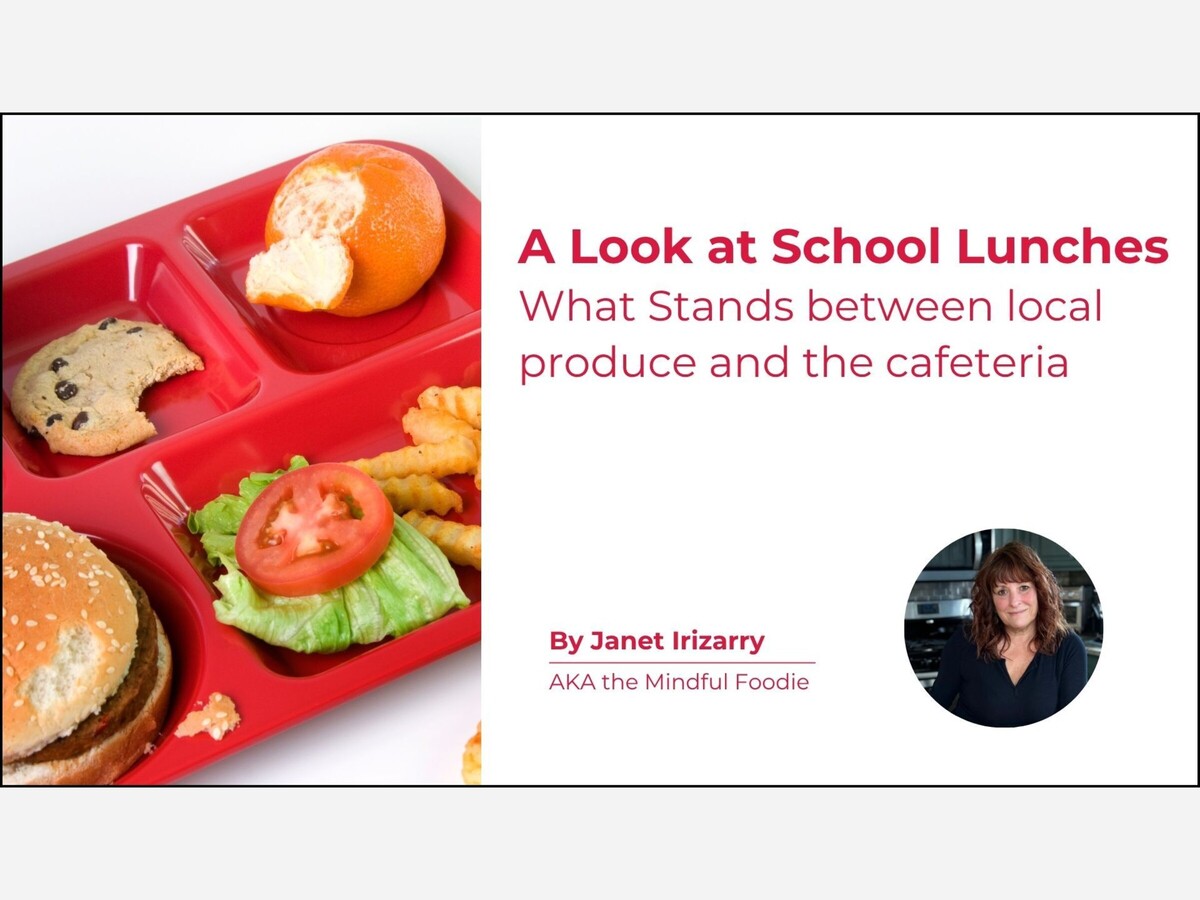



If someone says school lunches, what comes to mind? Nothing pleasant, you’d probably say.
School lunches in the U.S. are regulated to meet federal nutritional standards, but their actual healthiness depends on how well those standards are implemented in practice. But what does that even mean? And how stringent are the standards they follow, really?
You probably don’t spend much time thinking about it. School lunch has a way of staying in a blind spot, even for those of us who pay close attention to food in the rest of our lives. It’s the junk drawer you walk past every day and never open.
Then a few weeks ago I talked with someone who does open that drawer every day. She works to connect local farms to school cafeterias, and she gave me an education on the subject.
Becoming a Mindful Foodie starts here! Subscribe for free to begin your journey
The issue isn’t farms. We have farms everywhere. Where I live, and I’m sure many of you too, you can drive thirty minutes and pass farms with enough produce to feed a small country. The issue is that most cafeterias are stuck in contracts with giant food distributors that leave almost zero room for local food to squeeze in. A school might want to buy carrots from the farm down the road. The system basically says, “Nice idea, but no.”
So, what does that mean for our schools?
It means the disconnect I write about all the time. The gap between what we value and what actually ends up on our kids’ plates. Kids sit down to lunch made from food that traveled far and wide instead of a few miles. Food in school cafeterias is made for huge numbers of kids, so it focuses on quantity instead of real nourishment. The values we try to teach at home, like caring where food comes from and paying attention to what we eat, often disappear the moment our children step into the cafeteria.
Here’s what actually surprised me. Parents have more influence than they think, but it starts with awareness and then asking a few simple questions. Does our school have any local sourcing goals? Who is in charge of food service? Is any of this included in the district’s wellness policy?
Schools respond when parents show up curious. Change in a big system doesn’t happen because one person does everything. It shifts when more than one parent shows interest and the school starts to notice. Reaching out to your food service director or bringing it up at a school board meeting is a real next step, even if you don’t have a kid sitting in that cafeteria. Whether or not you have a child in school, you have a stake in what your community feeds its kids, and that’s reason enough to start asking questions.
Do One Small Thing: Pick one of these and look up the answer or ask someone at your school who might know.
That’s it. You don’t have to write an email or show up to a meeting this week. Just start with one answer.
Hit reply and let me know what you find out, or if this got you thinking about your own district. I’d love to hear it.
With gratitude,
Janet


Sunny, with a high of 68 and low of 50 degrees. Sunny in the morning, clear during the afternoon and evening,