

Image
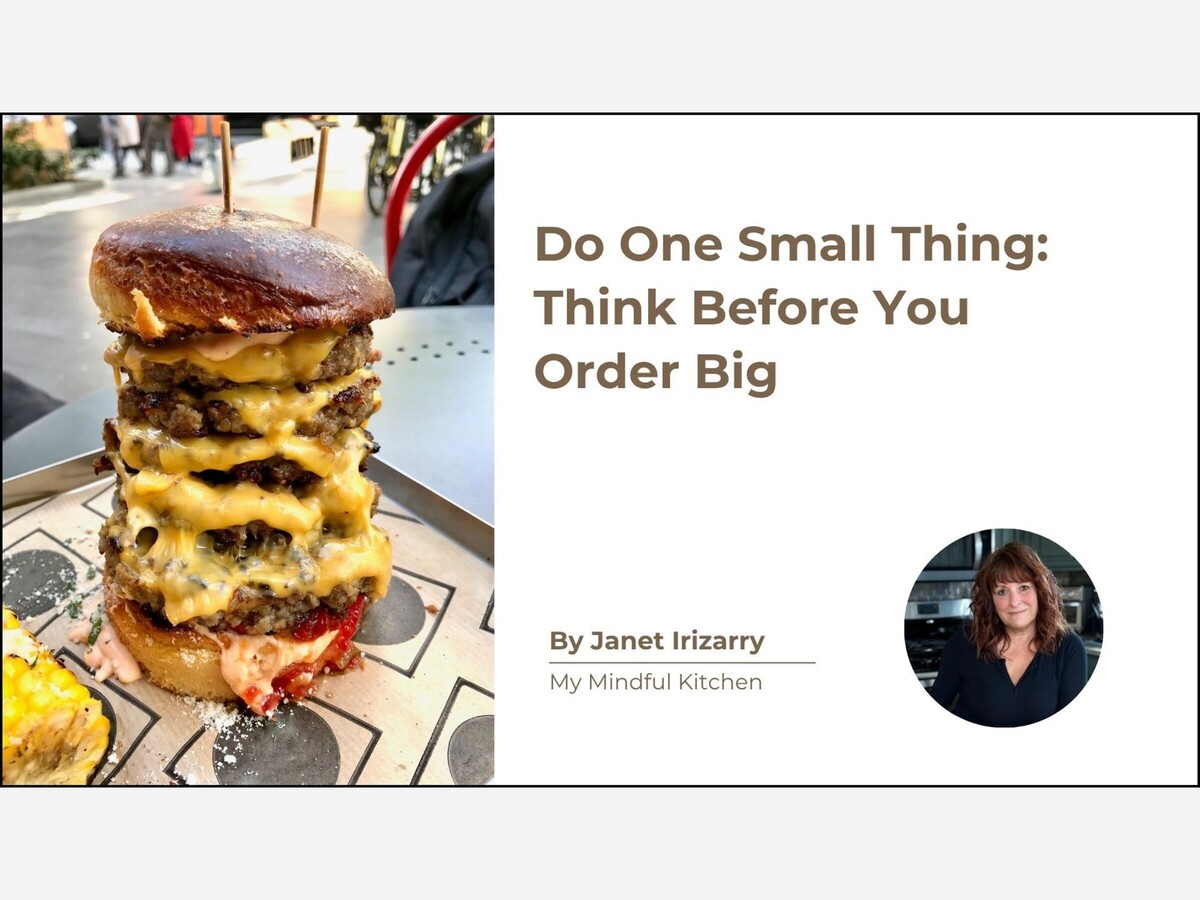
Last time I shared a story about a breakfast I could not finish. The egg sandwich, the hash browns, and the moment when the server cleared away food I normally would have taken home. That moment stayed with me.
I’ve been thinking about the way restaurants use oversized portions to signal generosity. A plate piled past what anyone could reasonably finish is meant to impress us, to make us feel like we got our money’s worth. But what does it say about us when a full plate becomes the reason we choose where to eat?
When a portion is too large to finish, the waste starts before the first bite. That doesn’t line up with what most of us actually care about. I think about the small plates at a good tapas restaurant, or a perfectly portioned bowl of soup that still feels generous because of how it’s served, the warmth of the bowl, the care in the presentation, the way the server checks in without hovering. None of that requires excess. A portion that honors the food, and honors the person eating it, doesn’t need to be oversized to feel generous.
Thanks for reading My Mindful Kitchen: Do One Small Thing!
Subscribe for FREE to receive new posts and support my work.
The real decision happened before the plate arrived. I had a choice between ordering something smaller that I knew I could finish or ordering what I was craving. I chose what I wanted. The problem was that I had a long day ahead and no way to keep leftovers cold, so most of that meal ended up in the trash.
Now, you know I don’t believe in beating myself up. I also don’t expect perfection from myself, and I certainly don’t believe throwing out most of one meal defines who I am. In the end, wasting that sandwich felt wrong though because it went against the values I try to live by. Values about paying attention. Values about not wasting what I am fortunate enough to have. Values about remembering that food comes from farmers, workers, land, water, and a long chain of people who make our lives possible.
When we leave food behind at a restaurant, we are not only throwing away leftovers. We are throwing away money. We are throwing away privilege. We are adding to a problem that affects every community, especially the ones already carrying the heaviest burdens. As I mentioned on Thursday, nearly 70 percent of restaurant food waste in this country comes from what customers leave behind. That is a big number.
The encouraging part is that patterns can change. They do not change through guilt or pressure. They change through small moments of awareness that anyone can practice.
Here is this week’s One Small Thing.
Pause before you order. Think about what you will truly finish and if you still order too much, bring the leftovers home.
This is a simple act. When we pause and offer that attention, even in small ways, we begin to live our values in a way that feels real and meaningful.
With gratitude,
Janet

Sunny, with a high of 69 and low of 45 degrees. Sunny for the morning, clear in the afternoon and evening,