70° and Overcast



Image
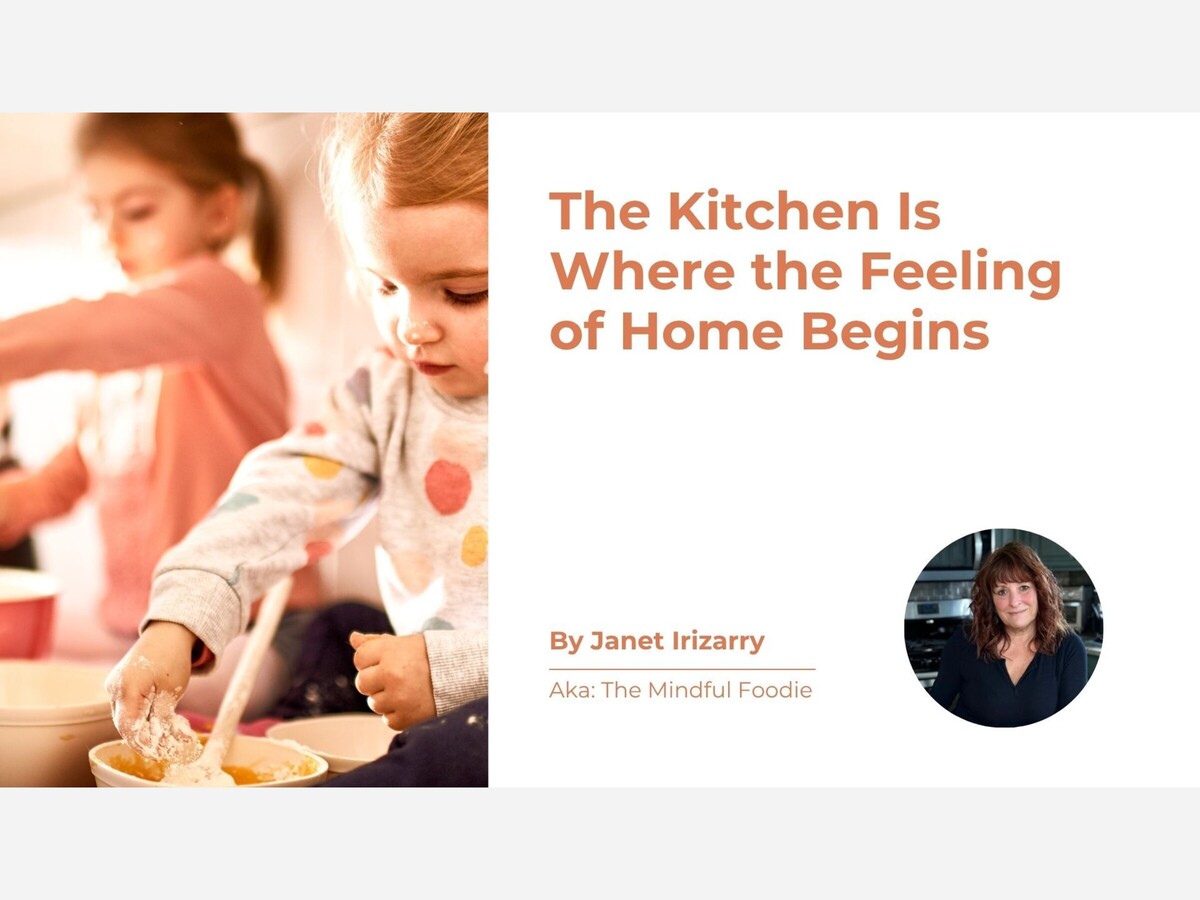
The kitchen may seem like one of the most ordinary places in our homes. It is where we prepare meals, rinse vegetables, and clear dishes at the end of the day. Because these routines are so familiar, it is easy to overlook how much is actually happening there. Yet the kitchen is often where some of the most important lessons of life take root.
I did not fully understand this until I read my son's college essay. He wrote about growing up in a home where the kitchen felt like a place to pass through rather than a place to belong. Reading those words, I realized something I had not seen before. My mom and the kitchen I grew up in had shaped so much of who I am, and I was not paying that forward to my own kids.
Many of us think of values as something we teach through laying down rules and giving lectures. We want our children to grow up to be kind, responsible, and caring about others and the world around them. But these values are learned through what we as parents model and what children see us practice every day. It is not so much what we tell our children that stays with them. It is what they witness in the everyday moments of life. The kitchen offers a steady stream of those moments.
When your child watches you prepare food with care, they are seeing respect for what nourishes us. When they are asked to help stir a pot or set the table, they begin to understand responsibility and participation. When your family sits down together, even briefly, they experience connection and belonging in a way that words alone could never create.
This is because children are wired to learn by watching and imitating long before they have the language or reasoning to process instruction. It is how they learn to walk, talk, and navigate social situations. Psychologists call this modeling, and research consistently shows that what a child sees repeated in their daily environment becomes their baseline for what is normal, what is valued, and how the world works. Words tell them what to think. Behavior shows them how to live.
Children absorb far more from what they observe than from what they are told. When they see food being used thoughtfully rather than wasted, they develop a sense of responsibility that extends beyond the kitchen and out into the world. When they see gratitude expressed for what is on the table, they begin to understand appreciation. When they hear conversation around a shared meal, they learn how people listen, laugh, and reconnect.
Over time, those small experiences accumulate. They become the quiet foundation of how a child learns to move through the world. The beauty of the kitchen is that it requires nothing extraordinary for this to happen. It becomes the perfect place to practice and pass on values and life lessons.
You may not think of your kitchen as a sacred space, but consider how often your family finds their way back to it. Backpacks get dropped, groceries get unpacked, and somehow the counter becomes the place where the impromptu conversations happen. It becomes our children's sense of what home feels like.
A child who grows up helping with small kitchen tasks begins to see themselves as capable. A child who sees food prepared with intention learns that nourishment matters. A child who experiences meals as a place of conversation understands that the table is more than a place to eat. It is a place where people come together.
That is why the kitchen can be such a powerful space. It may look like nothing more than a room where meals are made. But over time, it becomes something more. It becomes the place where the values we care about are lived out day after day. And one day, your child will carry those moments forward in ways you never saw coming, but that will have made all the difference.
Visit us at www.mymindfulkitchen.com


Sunny, with a high of 81 and low of 65 degrees. Clear in the morning, cloudy in the afternoon, overcast for the evening, clear overnight.