62° and Overcast
Image
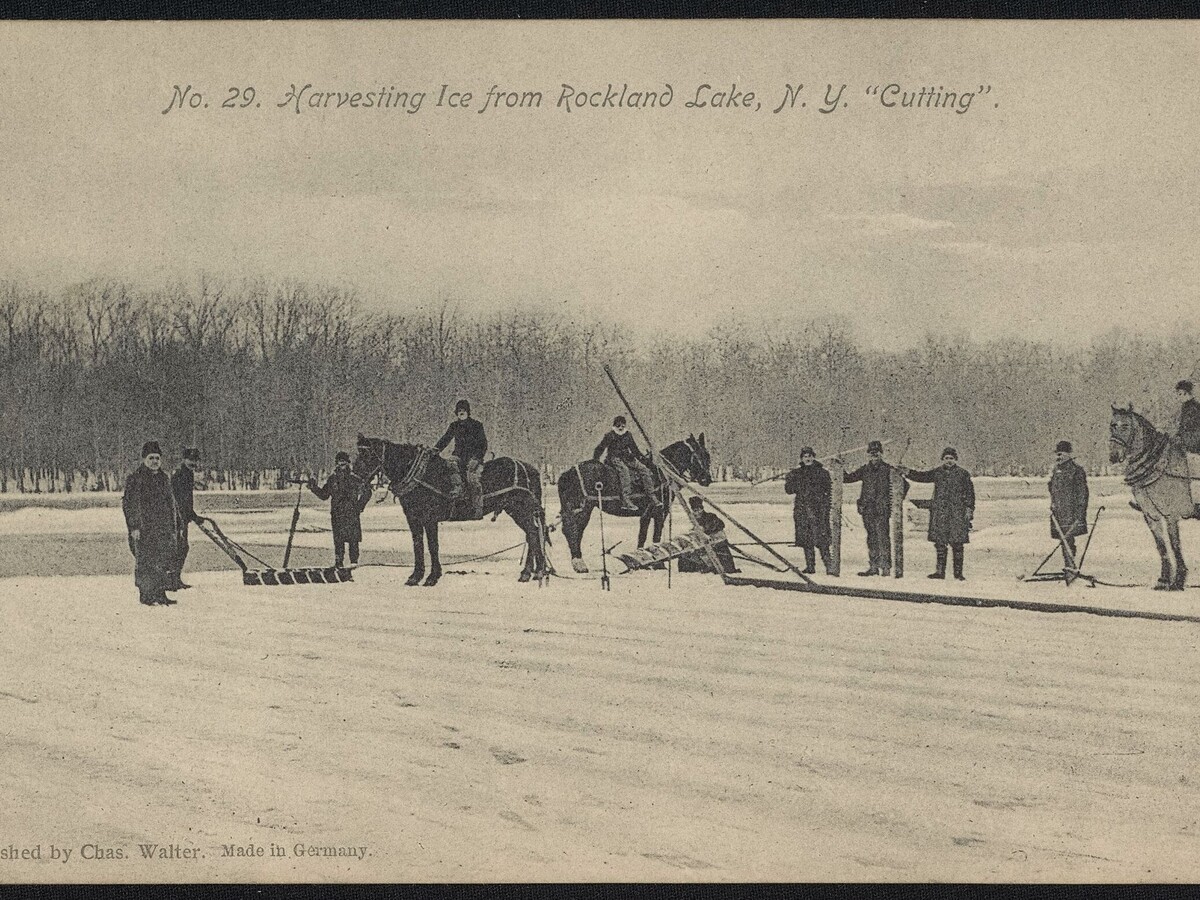
Image of men cutting ice for harvesting at Rockland Lake, from the Robert Knight Digital Postcard Collection at the New City Library.



Of the estimated half-million people who visit Rockland Lake State Park each year, how many know the lake was once a leader in the ice harvesting industry?
Drawn by the lake’s spring fed water and its proximity to the Hudson River, New York City and shipping lanes, the Knickerbocker Ice Company was formed in 1831 to meet a growing demand for ice to preserve food and keep beverages cool, according to the New York State Parks and Historic Sites.
The company stored its product in warehouses that could hold more than 100,000 tons of the 20-inch-by-40-inch frozen blocks. The ice was then conveyed via railway over Hook Mountain and down to a pier on the river where barges awaited to ship the cargo to New York City and beyond.
Rockland Lake’s ice harvesting business became so well known that Thomas Edison Films documented the process around 1900.
This once-thriving business gave way to technology in the 20th century, and Rockland Lake’s commercial ice harvesting ceased around 1924. All that remains are the ruins of the ice houses, including a plaque that claims 80,000 tons of ice in 1866 was harvested, and cites an 1860 news report stating that shipments went as far as India and Australia.
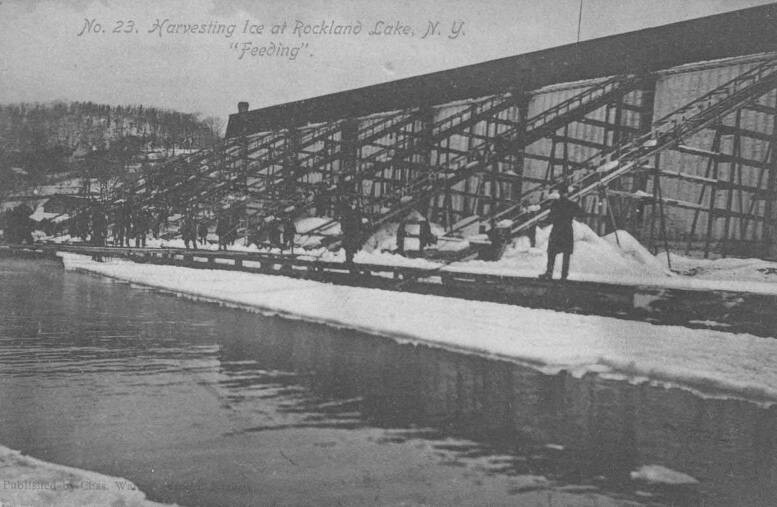 Men pulling ice from Rockland Lake for harvesting. The huge mechanism on the right is used to break the ice from the lake, where it moves up the conveyor belt to be stored. Courtesy of the Historical Society of Rockland County, New City, NY
The Palisades Interstate Park Commission later purchased private parcels Rockland Lake State Park opened in 1965. Ice house ruins were all that remained.
Timothy Englert, a Clarkstown artist, historian and conservationist, with the late Robert Patalano, started the Knickerbocker Ice Festival in 2007 to celebrate Rockland Lakes’ past - a century before it became a state park.
After jogging around the lake, Englert became interested in the story behind the ruins, and enlisted fellow Clarkstown resident Patalano, a professional ice sculptor, who created an 18-foot ice replica of the original Knickerbocker Ice house that lasted five weeks before melting.
Englert took a nearby locust log and created the Knickerbocker Bench to commemorate the site, and in January of 2007, the ice festival debuted, growing from a few hundred people that year to an estimated more than 25,000 people two years later.
After a more than decade-long hiatus, the festival returns on the weekend of Jan. 24-25, 2026, 8 a.m. to 6 p.m. both Saturday and Sunday, boasting ice sculptures celebrating our local and national heritage and igloos made from snow made on site. Visitors can gather around campfires to stay warm and enjoy a variety of food trucks and hot beverages.
The festival will spotlight the Hudson Valley’s commemorations of America’s 250th anniversary. Over three days, teams will use three tons of ice each to create sculptures celebrating our shared heritage.
The park’s northern pavilion will feature enlargements of historic postcards depicting Rockland Lake’s history, view footage shot by Thomas Edison and projected 10 feet tall depicting all phases of workers harvesting ice at Rockland Lake more than 125 years ago.
Englert’s Knickerbocker Benches can be found along trails and in parks throughout the Hudson Valley. He was a development executive for the Palisades Interstate Park Commission and a documentary filmmaker.
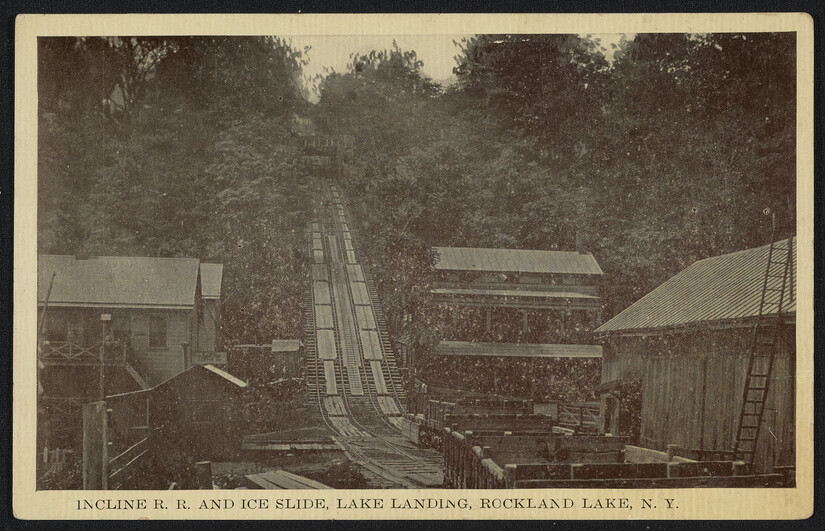 Image of the railway that conveyed ice shipments over Hook Mountain to Hudson River docks. From the Robert Knight Digital Postcard Collection at the New City Library
Whatever your views are on global warming, it's hard to dispute the idea that our winters have become milder since the days when Rockland Lake's ice was thick enough to produce thousands of pounds of frozen blocks.
So, will the weather cooperate for this year's Knickerbocker Festival? Although the beginning of January brought us frigid temperatures, the long-range forecast from The Old Farmer’s Almanac calls for milder conditions that weekend, which could put a damper on the festivities.
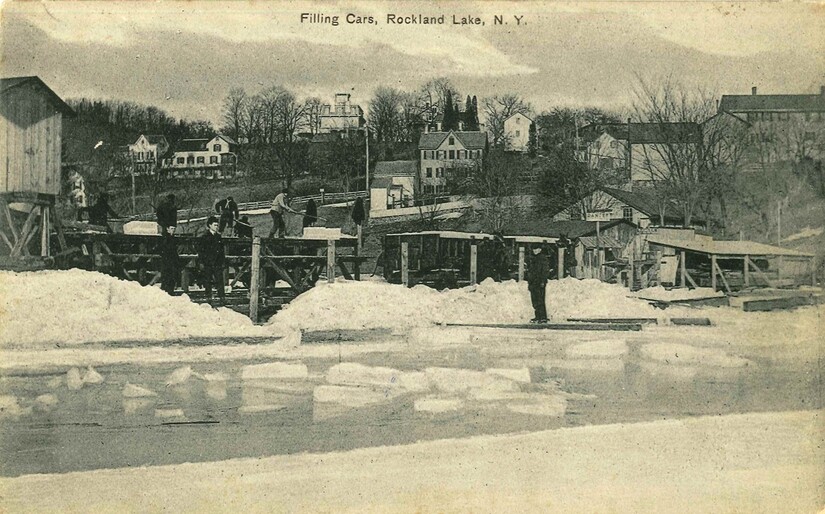 Cars are filled with ice during harvesting at Rockland Lake. Courtesy of the Historical Society of Rockland County, New City, NY
Admission to the festival is free, although there is a $10 parking fee. Festival sponsors are also being sought. Visit rocklandbusiness.org/community-resources/knickerbocker-ice-festival/ for more information. The park is located at 299 Rockland Lake Road, Valley Cottage. The park office phone number is 845-268-3020.
Robert Brum is a freelance journalist who writes about the Hudson Valley. Contact him and read his work at robertbrum.com.


Sunny, with a high of 71 and low of 55 degrees. Sunny during the morning, overcast for the afternoon and evening, clear overnight.