59° and Clear
Image
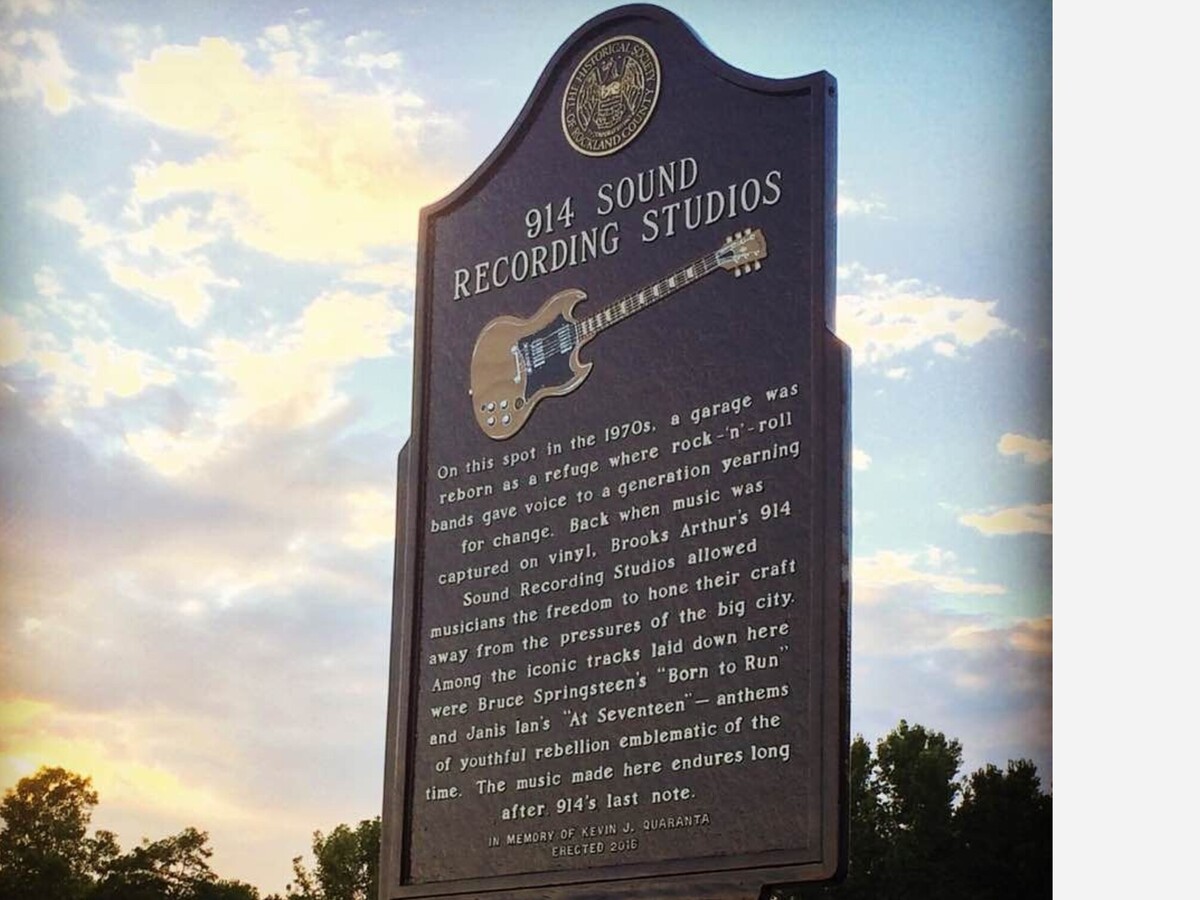
Historic plaque unveiled in 2016 at the site of the former 914 Sound Recording Studios in Blauvelt N.Y, where Bruce Springsteen and Janis Ian recorded in the 1970s. Photo: Clare Sheridan



In 2015, I wrote about the recording of Bruce Springsteen’s rock-and-roll anthem “Born to Run” on the album’s 40th anniversary, which led to the unveiling of a historic plaque placed at the site a year later. I revisited and updated the story on the album's 50th anniversary.
By Robert Brum
Fifty years ago this month — Aug. 25, 1975 — the album Born to Run was released, launching Bruce Springsteen into the rock’n’roll stratosphere.
But the record’s anthemic title track, with its echoes of Phil Spector’s “wall of sound” and Duane Eddy’s guitar, was born a year earlier at 914 Sound Recording Studios in the suburbs — not in the swamps of Jersey.
The former abandoned garage tucked away off Route 303 in Blauvelt, N.Y., had been Springsteen and the E Street Band’s home for their first two records — Greetings from Asbury Park N.J. and The Wild, the Innocent and the E Street Shuffle.
And while those albums were well-received critically, they were commercial duds, and Columbia Records was considering dropping the Garden State rocker.
He needed something big. Really big.
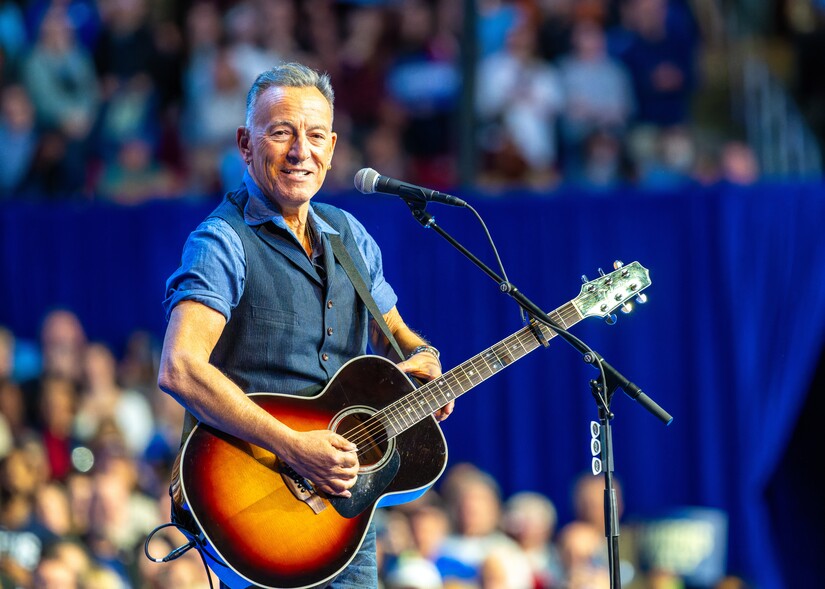 Bruce Springsteen performing in Philadelphia October 28, 2024 Photo: Shutterstock
So Springsteen spent six months writing the title track before returning to 914 to distill “seventy two tracks of rock’n’roll overkill on the sixteen available tracks at 914,” he writes in his autobiography.
The four-and-a-half minute title song of the album bearing the same name needed “that 747-engine-in-your-living-room rumble,” he writes.
Larry Alexander, assistant engineer on the track, recalled in a 2015 interview how Springsteen labored at coaxing the sound from his Fender Telecaster for the solo, moving the amp from the studio, out into the backyard, even into the bathroom.
Springsteen’s manager, Mike Appel, who co-produced the track, recalled bringing in a "mini-orchestra" – including a glockenspiel – into the tiny studio to capture the resonance of Phil Spector's densely layered sound.
Producer/engineer and 914 Studios founder Brooks Arthur knew something seismic was shaking his tiny studio.
"Mike Appel called me into the control room and I kept on hearing magic," Arthur told me in a 2015 interview.
Appel got hold of an early pressing and dashed off to leak the record to radio stations across the country in the fall of 1974. Born to Run exploded onto the airwaves en route to becoming Springsteen’s first Top 40 hit on Billboard’s Hot 100.
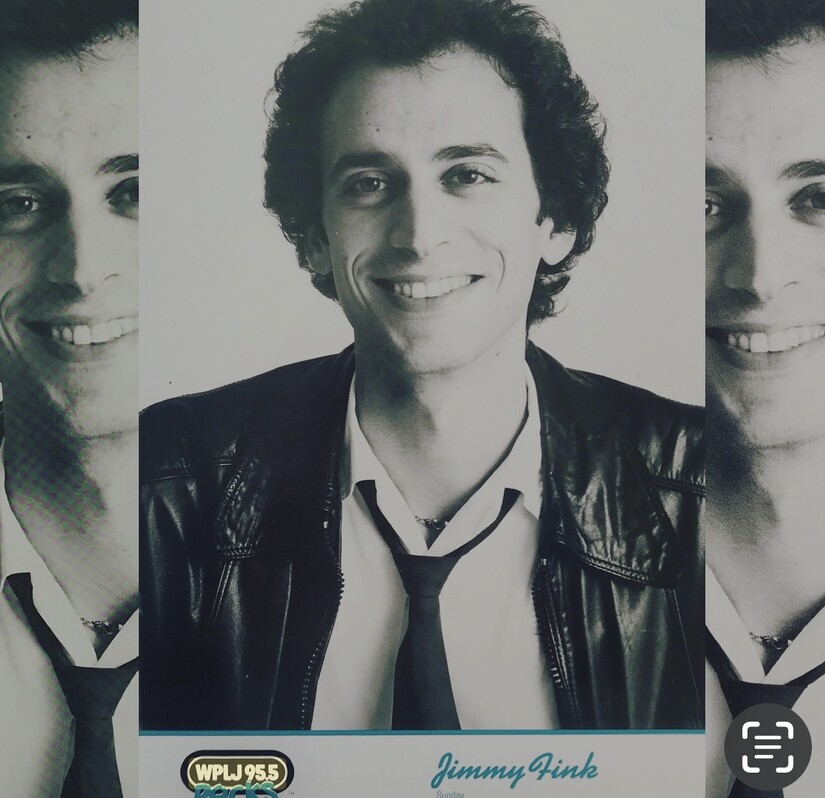 Jimmy Fink's promotional photo from WPLJ.
New York rock radio veteran Jimmy Fink was working at WPLJ in 1975, and recalled seeing Springsteen during his groundbreaking run at The Bottom Line – just before the album’s release that summer.
“I was hooked. Seeing him live is a significant experience to get you into his music,” said Fink, who’s now at The Peak 107.1 FM. “It was a great show. “
WPLJ’s morning DJ Jim Kerr led an on-air campaign to have Born to Run anointed as Jersey’s official state song, Fink said. The campaign never achieved its goal. “It’s not really all that positive about New Jersey; it’s pretty much about getting out,” he commented.
“In retrospect, Born to Run is one of the few albums that you can play every single song on,” Fink said. “And at The Peak, every single song is in our database, and when August 25th comes around I will play the album in its entirety at the radio station” at his nightly free-form After 6 feature.
Meg Griffin was among the DJs who got an early copy of the recording back when she was on the airwaves at now-defunct radio station WRNW in Briarcliff Manor.
“I received it on a Reel to Reel tape. And immediately played it in my show,” Griffin commented on social media.
Born to Run would be the only track from the 914 sessions to make it onto the eight-song album, after Springsteen grew impatient with the studio’s aging equipment and decamped for The Record Plant in New York City.
And although he tried to re-record the title song at the new studio, he couldn’t improve on his masterpiece.
“We would never corral that sound again,” Springsteen writes in his autobiography. “We couldn’t even come close to the musical integration, the raging wall of guitars, keys and drums.”
So the version cut in Blauvelt survives — the last testament to Springsteen’s highway run at 914 Sound Studios.
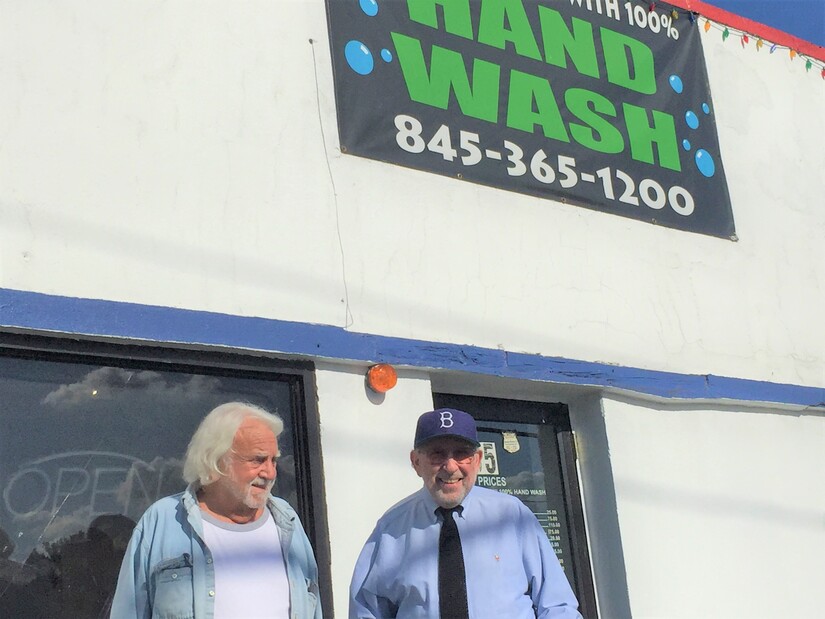 Famed songwriter Artie Resnick ("Under the Boardwalk") and Brooks Arthur outside the former home of Arthur's 914 Sound Recording Studios.
Brooks Arthur, who started 914 Studio in 1971, was already an industry legend by the time Born to Run came out. He had just produced Janice Ian’s Grammy winning album, Between the Lines, and the single At Seventeen.
He had previously engineered hit records for Carole King, Leiber and Stoller, Van Morrison and the Shangri-Las, including "Leader of the Pack" and "Walking in the Sand." Arthur, who died in 2022, continued his successful career in Los Angeles, supervising music for Adam Sandler’s films.
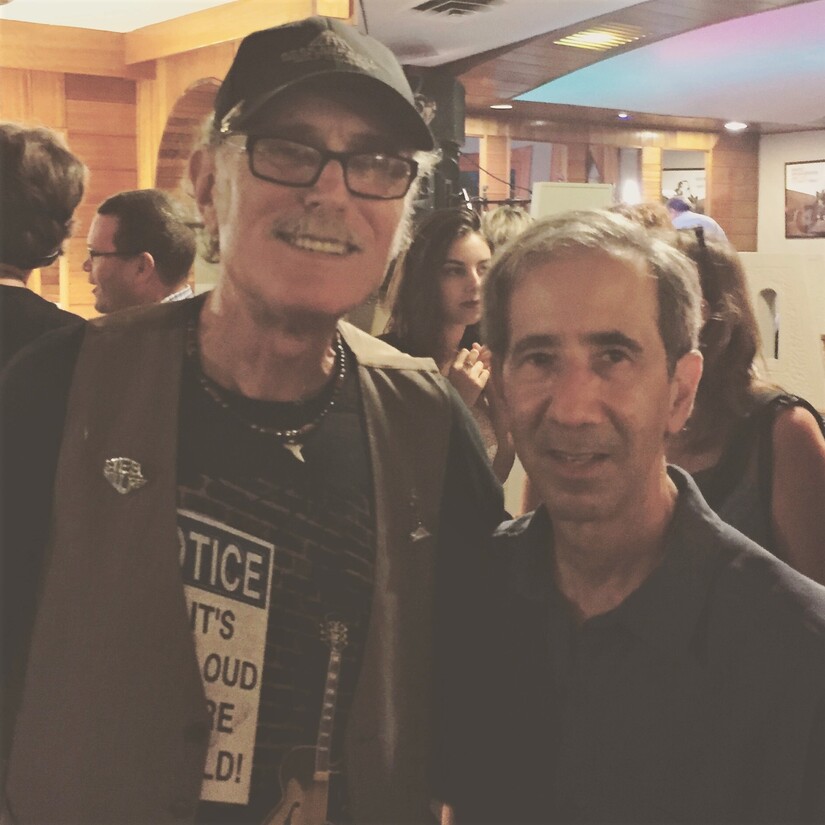 Former E Street Band drummer Vinny "Mad Dog" Lopez and Robert Brum during the 2016 unveiling of a plaque at the site where the song "Born to Run" was recorded. Photo: Robert Brum
Read more about 914 Sound Recording Studios:
The man who put 914 on the rock'n'roll map
Behind the scenes: Making Springsteen's first two records
Robert Brum is a freelance journalist who writes about the Hudson Valley. Contact him and read his work at robertbrum.com.



Sunny, with a high of 71 and low of 55 degrees. Sunny in the morning, overcast for the afternoon and evening, clear overnight.