57° and Light rain
Image
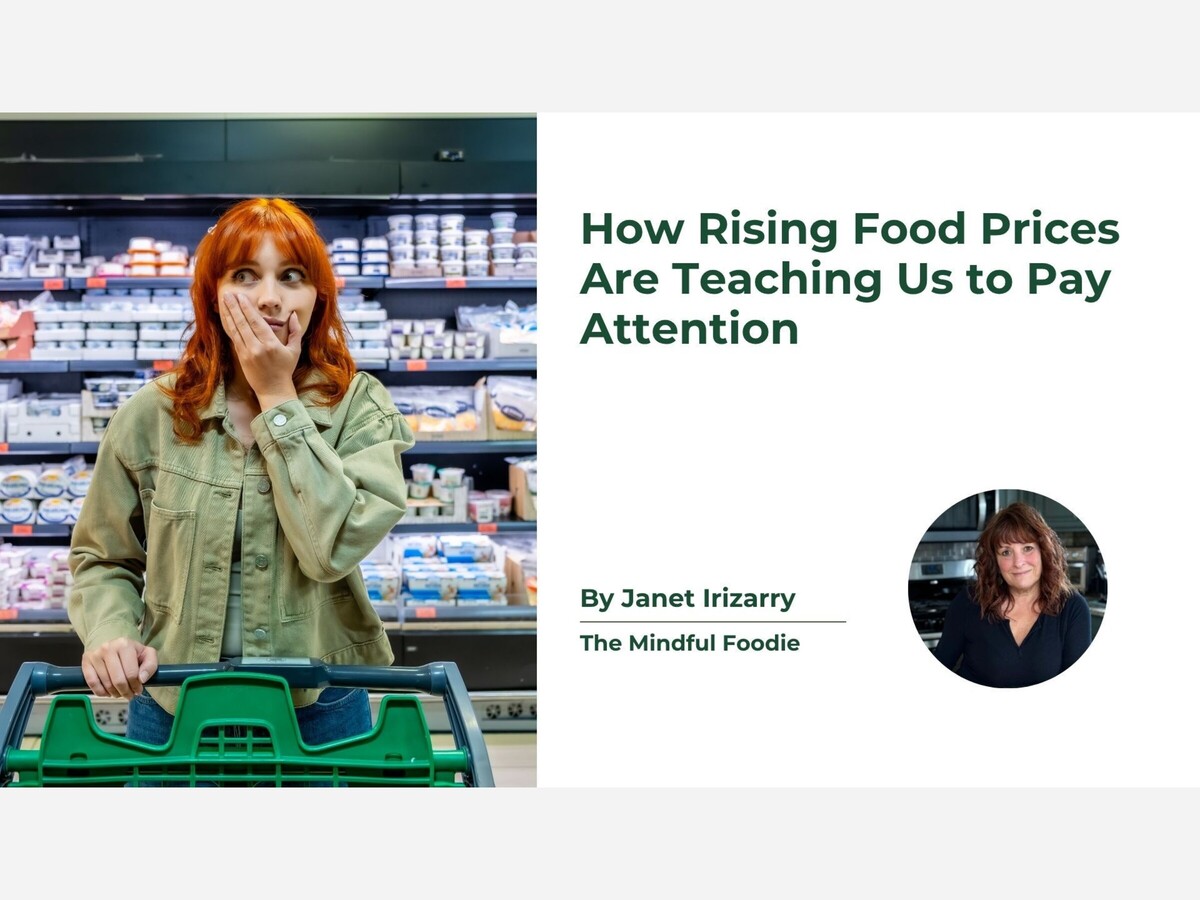



I stood in the checkout line last week and watched the total climb higher than I expected, again. Ground beef. A box of crackers. A can of coffee. Nothing special. And I found myself looking at my cart and asking, do I really need all of this, or am I just grabbing things out of habit, impulse buying, buying without a plan.
Turns out I’m not alone. A new study from the food waste research group ReFED found that as grocery prices have climbed this year, households are wasting noticeably less food. The households seeing the biggest jump in their grocery bills reported cutting waste at a much higher rate than households whose spending stayed flat. People are checking what they already have before they shop. Cooking more of what’s already in the fridge. Reaching for leftovers instead of letting them turn.
Thanks for reading My Mindful Kitchen: Do One Small Thing! Subscribe for free to receive new posts and support my work.
A lot of these higher prices trace back to something most of us never think about when we are standing in a grocery line. Drought. Water shortages are pushing up the cost of growing the food we rely on, and that cost eventually shows up on the receipt in your hand. The extra dollar on the berries is not random. It comes from a farm that had to irrigate longer because the rain never came. The rise in dairy prices is not random either. It reflects the energy it takes for farms to run pumps and cooling systems through long stretches of heat. Once you see it, it is hard not to connect the dots between the weather we are living through and the food we are buying.
For years, the message around food waste has been about doing better. Trying harder. Feeling the appropriate amount of guilt about the takeout containers in the back of the fridge. And it never really worked, not for most people, not for long.
What actually seems to be working is something much simpler. Attention. When the price of something goes up, we notice it. We look at it before we throw it away. We ask a question we weren’t asking before. That’s not a moral failing turned into a moral victory. It’s just what happens when we pay attention to something we’d been moving past on autopilot.
This is the whole idea behind My Mindful Kitchen, and it’s strange to watch the economy prove it before I could. The kitchen was never waiting for a new system or a better app. It was waiting for us to look.
The aha is not simply that food waste is a problem or that we should all be trying harder. It is that paying attention matters. It matters in small ways. It matters right away. It matters without judgment. Our kitchens have never asked us to be perfect. They have asked us to pause, to look, to consider what we already have. And when we give ourselves that moment, even a small one, we begin to make choices that honor our food, our families, and the world we share.
With gratitude,
Janet


Overcast, with a high of 59 and low of 55 degrees. Overcast in the morning, light rain for the afternoon, patchy rain nearby in the evening, overcast overnight.