60° and Clear



Image
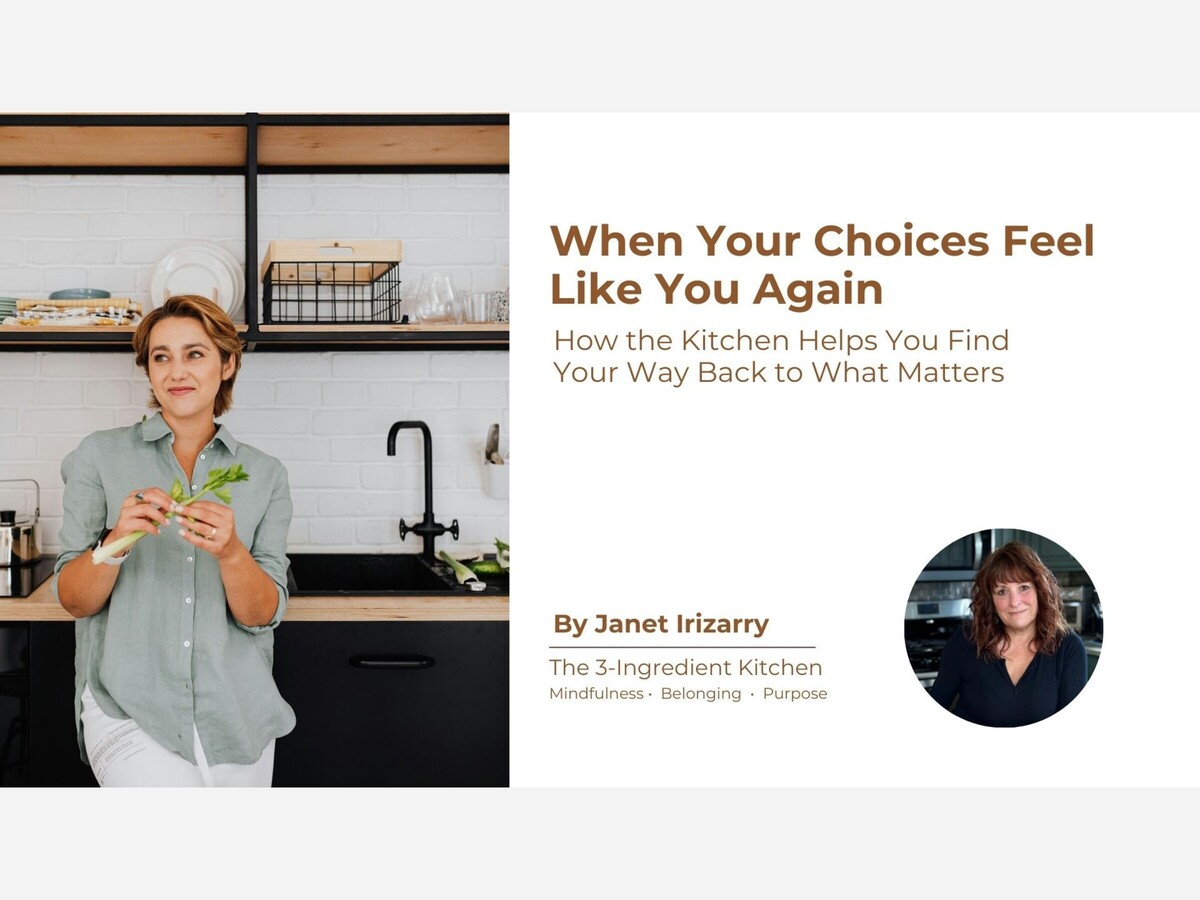
Most of us step into the kitchen dozens of times a day without thinking much about it. We open the fridge. Rinse a mug. Move something out of the way. Nothing remarkable happens. And yet, this is one of the few places where our choices repeat themselves daily, often revealing more about what we value than we realize.
Your values are not something you lose. They are something you return to. Even in the busiest seasons of life, they live beneath the routines that keep your days moving. They show up in the care you offer, the effort you make, and the quiet ways you try to do right by the people you love. You may drift from them, but they do not disappear.
Many of the values we long to reclaim are not new. They are already inside us. Kindness. Gratitude. Responsibility. Connection. From early on, we naturally move toward care and belonging. What changes over time is not who we are, but what life asks of us.
As life gets busier, we start defaulting to choices that are quick, easy, and efficient because they help us get through the day. Those choices often make life easier, but they do not always make it feel meaningful or aligned with who we are. Every so often, we sense that gap. We feel a subtle tension between short-term comfort or pleasure and the deeper sense of rightness that comes from choices connected to our values.
That difference matters.
Enjoyment is immediate. Joy is steadier and slower. It comes from actions that align with what you care about, even when they ask a little more of you. When your choices drift from your values, you often feel it before you can explain it. A low-grade dissatisfaction. A sense of being slightly out of sync. Not because you are failing, but because your internal compass is asking for attention.
When what you do begins to match what you believe, there is an easing. A steadiness. A grounded sense of coherence that does not come from control, but from alignment.
And realignment does not require a dramatic reinvention. It needs a place where attention naturally gathers and choices repeat themselves. A place where values can be practiced, not preached. For most of us, that place has been there all along. The kitchen.
We often think of values as beliefs, things we talk about or identify with. But in daily life, values are lived through behavior. Through repetition. Through small choices made when no one is watching.
The kitchen is uniquely powerful in this way. It is one of the few places where values show up every day, not as ideals but as actions. How we shop, cook, eat, and waste quietly ripples outward into our families, our communities, and the wider world.
Mindfulness in the kitchen does not impose values. It reveals the ones you already hold.
Responsibility, when practiced mindfully, does not feel like pressure. It feels like stewardship. Using what you have. Paying attention. Letting care guide decisions rather than guilt. When we slow down, wasting less stops feeling like a moral obligation and starts feeling like care for the food itself, the resources behind it, and a world where nothing exists in endless supply.
Gratitude in the kitchen is not about saying thank you out loud. It is about noticing what is already there. The food in front of you. The hands that grew it, cooked it, and brought it to your table. When you start paying attention in this way, food stops feeling disposable, and issues like food insecurity stop feeling abstract. They feel human.
Care is often quiet. In the kitchen, it shows up as feeding yourself or your family even when you are tired. It is choosing something simple and letting that be enough, rather than putting something time consuming on the plate or skipping the meal altogether. Those small choices add up, shaping how we care for others and how kindly we treat ourselves.
The kitchen is also one of the last shared spaces where lives naturally overlap. Even small moments matter. Passing a snack. Sharing a bite. Standing side by side. When we are present, these ordinary moments become points of connection, shaping how we think about belonging beyond our own homes.
When you slow down, you notice more. Moods. Needs. Energy levels. That awareness creates room for kindness and empathy, first at home and then in the world.
Presence is a skill, and the kitchen offers daily opportunities to practice it. Chopping, stirring, tasting. These small acts anchor attention. And when your actions reflect your values, even in modest ways, you begin to rebuild trust with yourself. You feel less like you are reacting to life and more like you are participating in it.
Living your values again does not require a new identity. It requires a place to practice. The kitchen offers that place, daily and imperfectly, without ceremony. Each small moment of attention becomes a point of alignment. Each aligned choice becomes a quiet vote for the kind of world you want to live in.
This is not compliance.
It is coherence.
And it begins in the kitchen.



Sunny, with a high of 75 and low of 59 degrees. Sunny in the morning, clear in the afternoon and evening,